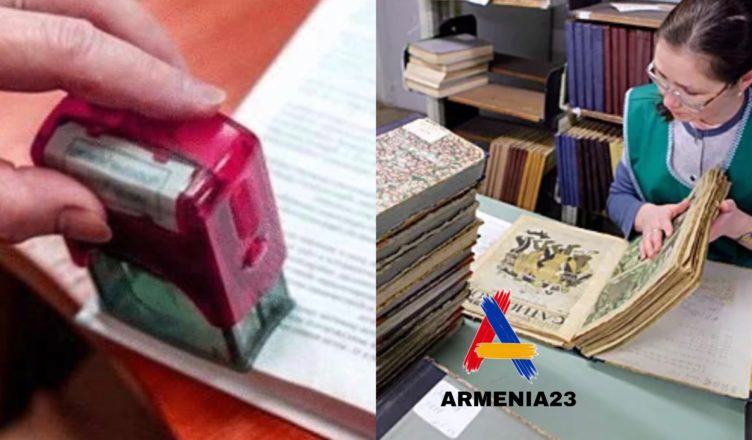
I was quite a curious child. My restless mind was the reason why I was the first among my peers to notice that
the librarian of our school stamps every book or text book exactly on the seventeenth page.
It became interesting to me why on the seventeenth, not on the first or, for example, on the twentieth,
but on the seventeenth. I asked this question to parents, teachers and even the technicians at our school. But no one could give me a clear answer.

Many may ask why I didn’t immediately ask the librarian for clarification. Such a question can be asked only by those who were not familiar with our school librarian.
The problem is that this woman had such a stern look that sometimes my knees even buckled in fear. I later learned that this is a fairly old tradition
The first printed paperback books had a non-standard cloth format of four pages by four, for a total of sixteen pages.
It was customary to consider such a number of pages as one bound author’s sheet, while the second set of pages began on the seventeenth page.
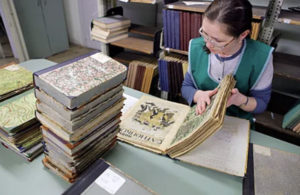
In the event that the first block of pages with the book’s title and author’s name was lost, a library stamp that could help identify it could always be found on the seventeenth leaf.
I can also add to your knowledge box that if you look closely at any book in the library, you will find the exact same stamp on page thirty.
Small reading booths most often stamp on page seventeen. On the seventeenth page, in addition to the stamp, you can also find the inventory number of the book.

I agree, this is a very handy library trick that also allows you to quickly and easily recover lost information about a book.