
When she checked up the 1974 signature online, she realized she had a unique find.
Finding a treasure while browsing the goods at a thrift store is not something that happens every day.
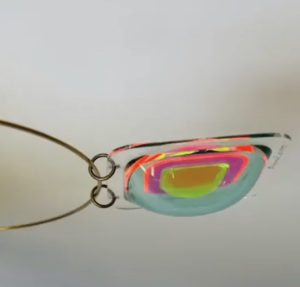
But for Jess Smith, a seemingly routine day of thrifting resulted in a remarkable find.She was looking through the numerous trinkets when she noticed a special necklace.
This necklace, which was only sold for $2 and had a throwback ’70s feel, seemed like a good addition to her collection.
She had no idea that this piece of ‘plastic jewelry’ was about to spill a priceless trade secret.

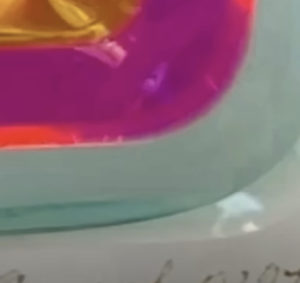
It wasn’t just any regular necklace, either. Jess spotted a signature and the year 1973 written on it. This was a vintage artifact,
not just something created in a factory. The necklace was a handcrafted, one-of-a-kind item that bore the creator’s mark,
as suggested by the signature. Jess was intrigued and decided to buy it since she had a sneaking suspicion that there was more to this necklace than first glance.
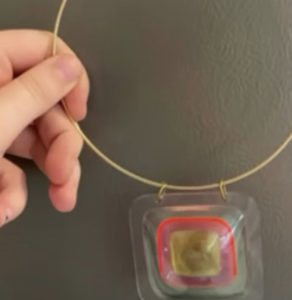
When she went home, Jess’s curiosity overcame her. She used Google Lens in an attempt to solve the puzzle of the necklace’s signature.
The outcomes were astounding. The jewelry was created by none other than Pittsburgh, Pennsylvania-based artist Arinell Deroy Gruber.
The popularity and demand for Gruber’s works led to high auction prices for them. When Jess found a similar necklace online that was being offered
for auction for a few thousand dollars, her heart began to race. She then realized that she was in possession of an original Gruber piece
that may be worth thousands of dollars. The thrift store treasure had instantly changed into a precious artifact, and the thrill was evident.
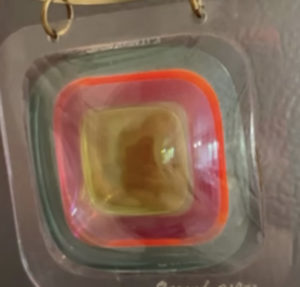
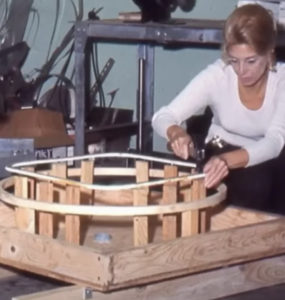
What about Arinell Deroy Gruber, though? Gruber was a well-known sculptor during the 1960s and 1970s, according to a thorough investigation.
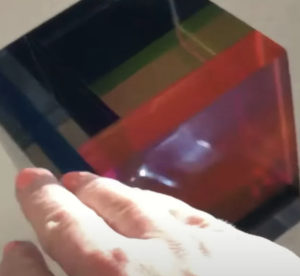
She was praised for her distinctive 3D plexiglass creations, which were evidence of her avant-garde artistic
style. Gruber sadly passed away in 2011, but her masterpieces continued to carry on her memory.
With this newfound information, Jess went to a nearby gallery that featured Gruber’s artwork. She made a find that surprised the curators.
They carefully examined the necklace and determined that it was worth a stunning $3,000. This came as a windfall for Jess, a reward for her astute observation and intuition.
Jess, however, made a kind option as opposed to taking advantage of her unexpected good fortune. She made the decision to donate the necklace to
the museum in order to put it on display for both art lovers and the general public to enjoy. Jess gave a straightforward yet thought-provoking
response when asked about her choice. She considered the necklace to be both a valuable object and a work of art.
Jess, who is also an artist, had a strong emotional attachment to the necklace and Gruber’s legacy.
She might have made money from selling it, but giving it out gave her something more priceless: the satisfaction
of introducing the world to art. She wanted others to see the beauty and significance of the necklace as she did.
It’s comforting to know that things aren’t always about the price in a materialistic world. Sometimes, it has to do with the narrative, the background, and the feelings that a piece arouses.
And for Jess, her $2 discovery from the thrift shop is more than simply a necklace. It is a tribute to the enduring fascination of the arts.