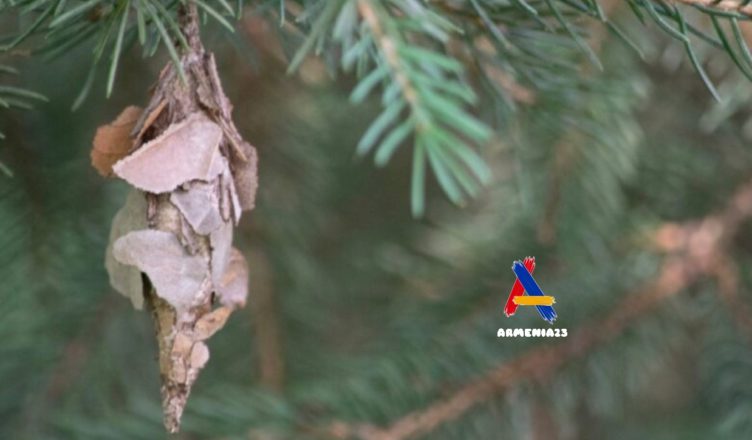
Evergreen Bagworms can be a serious issue, despite the fact that their name seems harmless.
These pests, which are actually moths in their larval stage rather than worms, pose major threats to
both deciduous and evergreen trees, resulting in damage and even death if they are not eliminated.
Evergreen Bagworms, also known as Thyridopteryx ephemeraeformis, are so named because of the unusual protective covering they create around themselves that resembles a bag.
The larvae produce a silk-like thread that they use to bind trash like twigs and leaves to their bodies in
order to make these bags. This casing gradually gets larger, giving the worms cover and a place to stay.
What is an Evergreen Bagworm’s life cycle?
The female adult begins the reproductive cycle by laying eggs inside her casing,
which stays attached to the tree even after she dies. The eggs remain in the casing throughout the winter
and eventually hatch in late spring or early summer, giving rise to tiny larvae. Then, using their
silk-like thread to make their own bags, these larvae set out to find a suitable tree to attach to.
Although they may begin small, these bags progressively get larger as the larvae develop and occasionally
come out to gather additional plant material for their casing. As the larvae advance through each stage, new bags are produced.
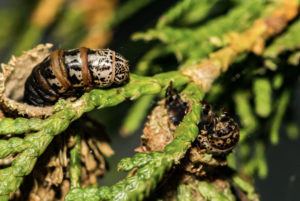
Treatment for evergreen bagworm
Evergreen bagworms may appear innocent, but they can seriously hurt trees because they attack the leaves and stop the absorption of nutrients.
This renders the tree frail and prone to additional ailments, which can ultimately result in the tree’s death.
How then can you maintain the health of your trees while avoiding Evergreen Bagworm damage? There are a few options available to you, such as:
Using pesticides made specifically for bagworms, removing the bagworms by hand, pruning the afflicted branches,
encouraging natural predators like birds and parasitic wasps in your garden, and chemically reducing the problem.