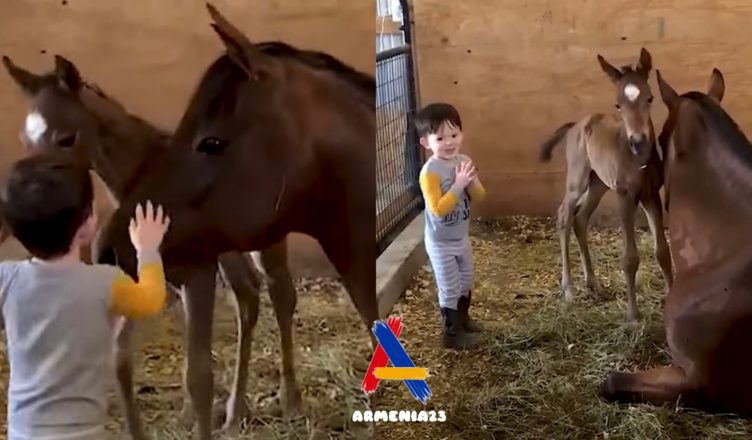
When it comes to introducing their children to the world of horseback riding, parents must put their kids’ safety around horses first.
Horses can weigh more than a thousand pounds, and they often kick and bite, which can be very dangerous for kids who aren’t used to their antics.
Even though minor errors might result in accidents, it’s crucial to prevent fear from keeping kids from enjoying the joys of being near horses.
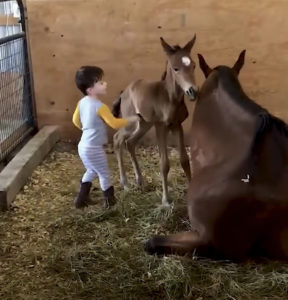
Horses can react to people in unanticipated ways and have a wide range of personalities. It is important to teach
your kids to ask permission before approaching a horse that is being ridden or that is close to its owner.
You can find out about the horse’s temperament and comfort level with strangers from the owner. It is better to stay away from the horse completely if the owner is not around.
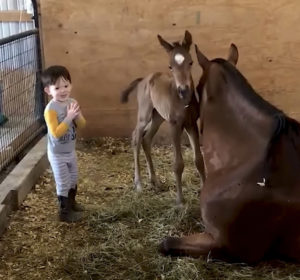
Teaching your child to quietly introduce themselves to horses by speaking at a regular level and pitch before approaching them is one way to ensure their safety around horses.
This is an extremely important safety advice because abrupt movements can trigger an animal’s fear response.
Given that the mother was with her newborn and that horses’ protective and aggressive tendencies might develop
in the first few days of a foal’s life, the child’s cautious approach to the horses in the video is praiseworthy.
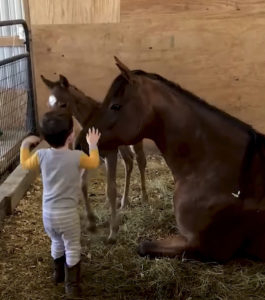
Children can benefit greatly from the company of horses as they naturally gravitate toward these magnificent animals and offer a wholesome substitute for screen time.
In addition to being a lot of fun, horseback riding fosters a child’s connection to the natural world and can be done alone or with others.

For kids, riding is a terrific form of exercise in addition to being fun. It gives them aerobic benefits and aids in the development of balance, coordination, and flexibility.
It is a myth that riding a horse doesn’t involve a lot of work on the part of the rider. Children can also get a wonderful upper-body workout with grooming and stall cleaning as part of horse care.
Children gain awareness of their own health requirements as they study the value of a healthy diet, frequent exercise, veterinarian examinations, and dental care for a horse’s wellbeing.