Of all the things they have to miss, deployed military women and men probably miss home the most.
They get a degree of security and comfort from it that they do not get from being deployed. This could be especially difficult for parents who can’t witness every one of their kids’ ‘firsts.’
They are not there for the first steps, the first word, or, for the fathers among you, the birth itself.
One illustration of the role of a military father was Skyler Cooper. He spent seven months in Kuwait with the Kansas Army National Guard,
according to a CBS story. When he died, his two boys, Corbett and Leighton, and his wife Cydney were left behind.
Even though Skyler had left, Cydney was still expecting twins. Her pregnancy was just 33 weeks along when the disease occurred.
Cydney gave birth to their twins, Emma and Kyla, who were born prematurely. They were forced to stay in the NICU as a result.
The whole encounter was fraught with a great deal of anxiety. Because she had two kids at home and twins in the neonatal intensive care unit,
Cydney was, in her words, “hanging on by a string.” She told Good Morning America that she missed her hubby more than she ever had before.
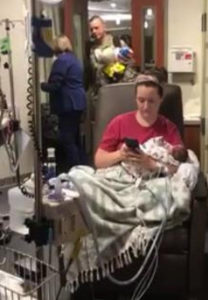
Cydney, who was fatigued, went to the hospital one day to see her two little girls since she was there. Upon receiving a text message from Skyler, she inquired about the twins’ well-being.
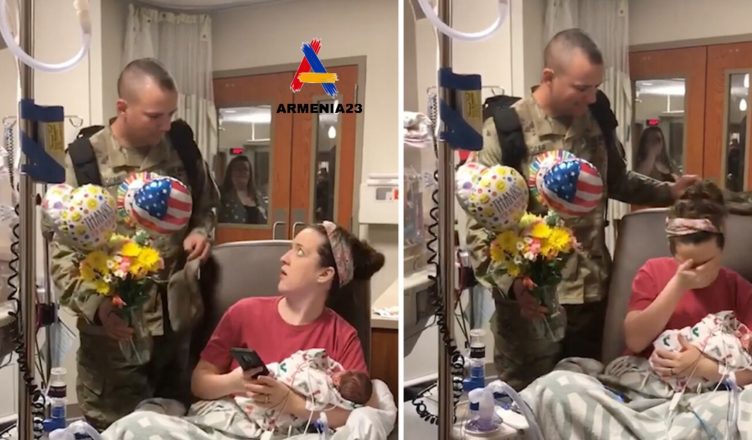
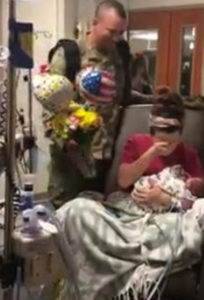
He entered the hospital room carrying balloons and flowers arranged in the shape of the American flag at that precise moment.
Cydney could not take the news. Tears sprung to her eyes. In a Good Morning America interview, Cydney expressed her surprise and relief.
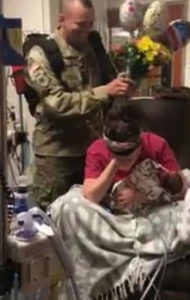
Considering that Skyler had come back, he and Cydney managed to hold off on the surprise a bit longer. His two sons were giddy with delight when they learned that their father had come home.
Cydney noted the forthcoming reunion in a Facebook post. She gave the information throughout their ‘one year of crazy.’
Following her own pregnancy and delivery, 48392 Skype calls, many plane trips, twelve days in the neonatal critical care unit, a great deal of support from family and friends,
and a great number of tears—that is how Cydney estimated it. After all that, her soldier had finally returned home, based on what she wrote.