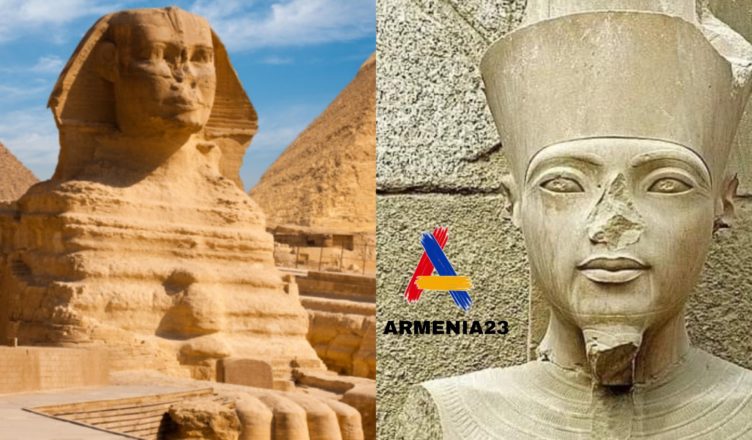
When archaeologists began to find statues and images of pharaohs in Egypt at the end of the last century,
they were not particularly surprised to find that almost all of the statues had broken noses and hands, and damaged eyes.
The answer seemed obvious to everyone: the ancient finds date back to BC. in the 25th century,
so it is quite logical that they were not preserved intact for many centuries.In short, everyone blamed the time.
But the curators of the exhibition at the Brooklyn Museum did some research and released their result.
Representatives of one of the oldest and longest-lived civilizations in the world intentionally broke the nose of the statues.
After all, there is no important part of the face in the images made by the ancient Egyptian masters.
‘This was done on purpose,’ says American archaeologist and Egyptologist Edward Bleiberg. Rulers from
different dynasties fought for power, so the differences literally and figuratively scarred every historical period.
Bleiberg has been at the Brooklyn Museum since 1998. He is the curator of the collection of Egyptian and Middle Eastern art.
‘The Egyptians attributed supernatural powers to images of the human body,’ the historian explains.
Without a nose, a statue, i.e. the dead man’s spirit ceased to breathe, and therefore his prototype could not be reborn.
The Egyptians firmly believed in the afterlife. The rulers who ruled the country were afraid that the dead pharaoh might even rule the state from the next world.
Therefore, they often resorted to icons who made changes to the statue: they broke his nose, covered
his ears so that he could not hear prayers, cut off his hands so that he could not make and receive offerings.
‘At that time, there was a clear belief that damage limits the capabilities of the depicted person,’ continues the Egyptologist.
The pharaohs severely punished those who changed their image in paintings during life, but after death they could be rendered powerless.
According to Bleiberg, who told CNN about his discovery, the icon groups were not vandals because they did not destroy the statue, but only made some changes to its appearance.
However, it is incomprehensible to a modern person, because for us art is considered to be everything that reminds us of the Egyptian civilization.