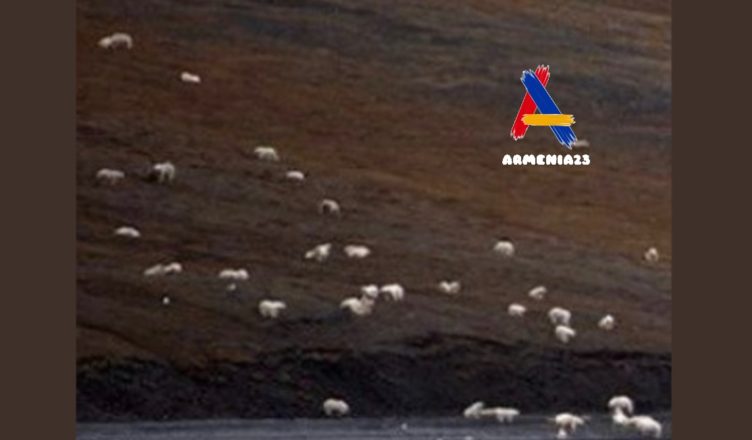
In the vastness of the Arctic territory known as Wrangel Island, more than 200 bears appeared to be grazing sheep.
Both shocked visitors and brave researchers witnessed this unusual sight from the Akademik Shokalskiy,
a serene vessel floating around the edges of this Russian-controlled island buried in the Arctic Ocean.
The incredible confluence of these Arctic animals was brought about by a large whale corpse that released a potent odour into the air.
These enormous bears, also referred to as ‘giants’ in the tundra and Arctic, arrived on or before September 19.
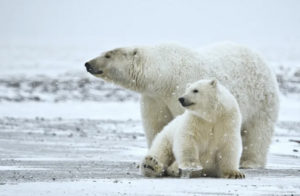
They remained until all of the whale’s remains had been devoured. This lasted for one or two days.
The expedition’s renowned leader, Captain Rodney Russ of Heritage Expeditions, called the experience ‘unforgettable.’
They carried the memory of it with them throughout the rest of their lives. One of those days, he thought, ‘that me and my friends will always remember.’
Warmly recalling the incident, Captain Russ said, ‘we observed a ‘group’ or ‘congregation’ of polar bears as we went down the curving lines of the coastline.
It like a tapestry stitched into the fabric of the beach. Then, we came across a dead bowhead whale’s carcass on the sand.
As we looked about, we discovered perhaps 150 bears of all sexes, sizes, and ages. While some had finished their supper, some were taking pleasure in their feast.
They had all been drawn to the cetacean’s resting place, it was clear. We sent Zodiacs to this encounter with a desire for closeness and a dash of audacity.
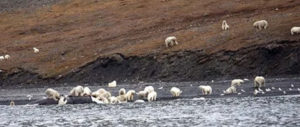
Beyond words, what took place in front of our eyes was a performance. In an effort to record and share
this journey with the world—a glimpse into a fascinating adventure—we were only able to obtain one shot.
There are about 230 bears in this area, according to The Siberian Times, which records incidents. Astounded tourists’ accounts compare the density to grazing sheep.
A 2,900-acre bear preserve, Wrangel Island is tucked between the East Siberian Sea and the Chukchi Sea.
The greatest number of bear dens have been found on this island. More than 400 mother bears use this polar reserve as their mating location during the winter.
These creatures have migrated in large numbers to the coastline of Wrangel Island with the arrival of summer. The decreasing territory in the plains is directly tied to this ongoing catastrophe.
The ‘Galapagos of the North,’ Wrangel Island, is a reminder of the time when woolly mammoths roamed these regions.
It is a live reminder of the resilience of life and the intricate web that forms in the embrace of the Arctic.